Let’s learn Japanese with our analysis of manga. We will analyse a manga snippet from Yotsubato! (よつばと!) Volume 4.
CONTENTS
Manga Snippet
 ©よつばと! (電撃コミックス)
Sentences
Hover or tap to reveal the censored romaji and English translation.
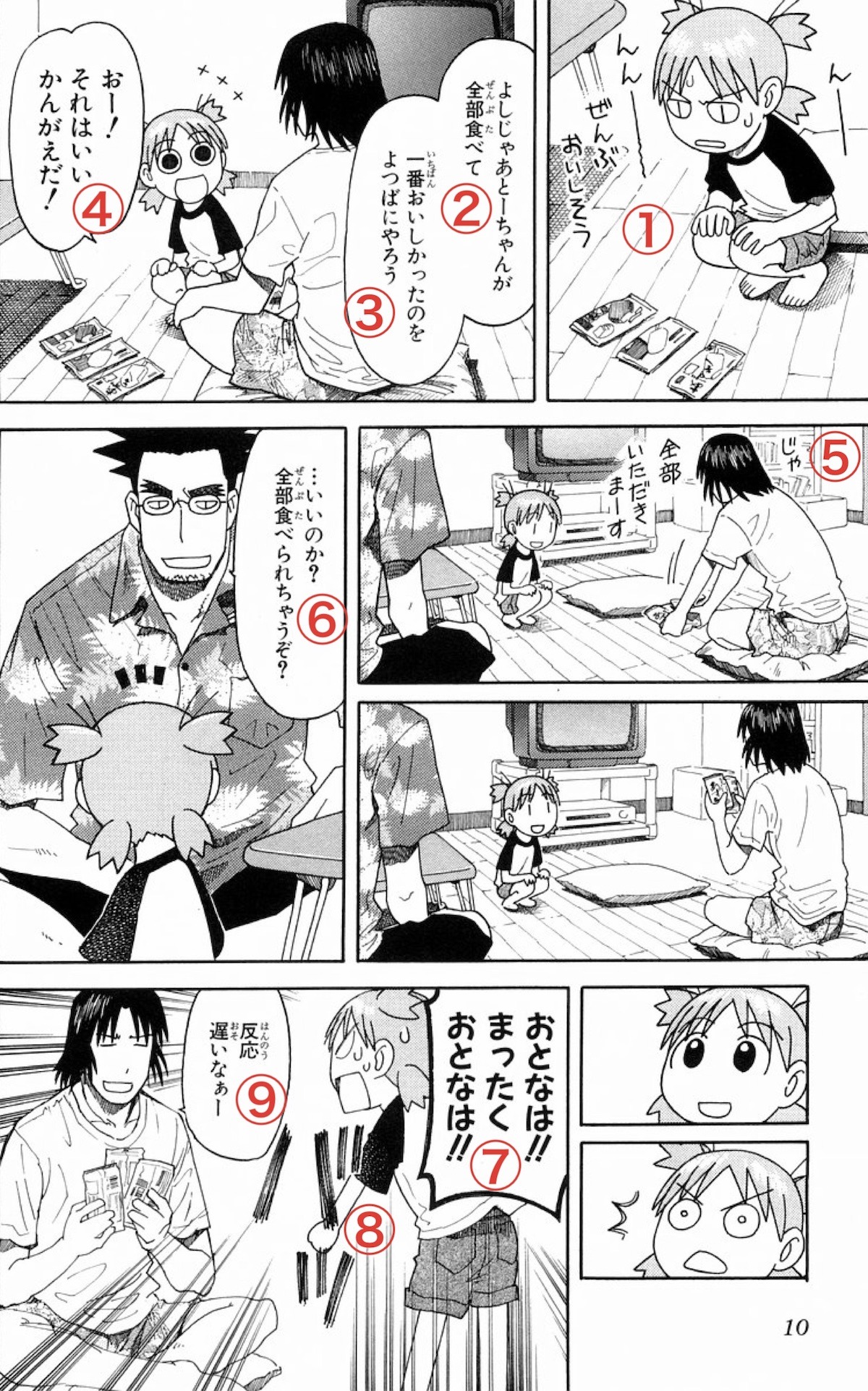
んーんんーぜんぶおいしそう
ñ nñ zenbu oishisō
Hmm. Hmmmm. They all look good.よしじゃあとーちゃんが全部食べて
yoshi jā tōchan ga zenbu tabete
Ok then Daddy will eat all of them and…一番おいしかったのをよつばにやろう
ichiban oishikatta no o yotsuba ni yarō
give you the one that tasted the best.おー!それはいいかんがえだ!
ō! sore wa ii kangae da!
Wow! That’s a good idea!じゃ、全部いただきまーす
ja, zenbu itadakimāsu
Ok then, I’ll gratefully eat all of them.いいのか?全部食べられちゃうぞ?
ii no ka? zenbu taberare chau zo?
Are you ok with this? He’s going to eat all of them.おとなは!!まったくおとなは!!
otona wa! mattaku otona wa!
Grown-ups! Freakin’ grown-ups!バッ
ba
whop反応遅いなぁー
hannō osoi nā
Your reaction is slow.
Analysis of Manga
「んーんんーぜんぶおいしそう」
- んー (interjection) – hmm
- ぜんぶ (noun) – all
- おいしそう (i-adjective) – looks good EXAMPLES
「よしじゃあとーちゃんが全部食べて」
- よし (interjection) – used when you make a decision; all right! OK!
- じゃあ (conjunction) – then
- とーちゃん (noun) – daddy
- が (particle) – indicates subject
- 全部 (noun) – all
- 食べて (verb) – eat and
「一番おいしかったのをよつばにやろう」
- 一番 (adverb) – the best
- おいしかった (i-adjective) – was delicious
- の (particle) – makes an adjective into a noun; one, thing
- を (particle) – indicates direct object of action
- よつば (noun) – name of the main character meaning four (よつ) leaves (ば)
- に (particle) – indicates direction; to
- やろう (verb volitional-form) – shall give
「おー!それはいいかんがえだ!」
- おー (interjection) – wow, oh
- それ (noun) – that
- は (particle) – indicates sentence topic
- いい (i-adjective) – good
- かんがえ (noun) – idea
- だ (auxiliary) – makes a sentence declarative (attached to a noun or na-adjective)
「じゃ、全部いただきまーす」
- じゃ (conjunction) – then
- 全部 (noun) – all
- いただきます (verb) – I will gratefully eat (a phrase used in Japanese formality before eating)
「いいのか?全部食べられちゃうぞ?」
「おとなは!!まったくおとなは!!」
- おとな (noun) – grown-ups
- は (particle) – indicates sentence topic
- まったく (expression) – expresses one’s surprise, anger, disappointment, etc; jeez!, good grief! EXAMPLES
「バッ」
- バッ – onomatopoeia for sudden motion
「反応遅いなぁー」
- 反応 (noun) – reaction
- 遅い (i-adjective) – slow, late
- なぁ (particle) – expresses admiration, compliment, surprise, etc.
Examples
Adjective + そう (looks …)
そんな悲しそうな顔しないでよ。
sonna kanashisō na kao shinaide yo.
Don’t make such a sad face.
包丁で指を切ったの?痛そう!
hōchō de yubi o kitta no? itasō!
You cut your finger with a knife? Looks painful!
Passive Verb + ちゃう (something unfavourable is done by someone)
財布を車に置いておくと盗られちゃうよ!
saifu o kuruma ni oiteoku to torare chau yo!
If you leave your wallet in the car, it’ll get stolen!
お母さんに日記を見られちゃった。
okāsan ni nikki o mirare chatta.
I had my diary seen by my mum. (My mum saw my diary)
ぞ (indicates emphasis in male speech)
早く寝ないと明日起きられないぞ。
hayaku nenai to ashita okirarenai zo.
Sleep early or you won’t be able to wake up tomorrow.
飲みに行くぞ!
nomi ni iku zo!
Let’s go for a drink!
It sounds a bit blunt as it is usually used for equals or inferiors in male speech. It is also used to encourage oneself. In this usage, females use ぞ as well.
よし、勉強するぞ!
yoshi, benkyō suru zo!
All right, I’ll study!
まったく (expresses one’s surprise, anger, disappointment, etc)
一人でトイレに行けないの?まったく、まだまだ子供だな。
hitori de toire ni ikenai no? mattaku, madamada kodomo da na.
You can’t go to the toilet by yourself? Jeez, you are still a child.
まだ友達と仲直りしてないの?まったく、素直じゃないな。
mada tomodachi to nakanaori shitenai no? mattaku, sunao janai na.
You haven’t made up with your friend yet? Good grief, you are stubborn.
Support Easy Peasy Japanesey
If you enjoy our content, please consider supporting Easy Peasy Japanesey. Your support will help keep us going. Thank you for your support!