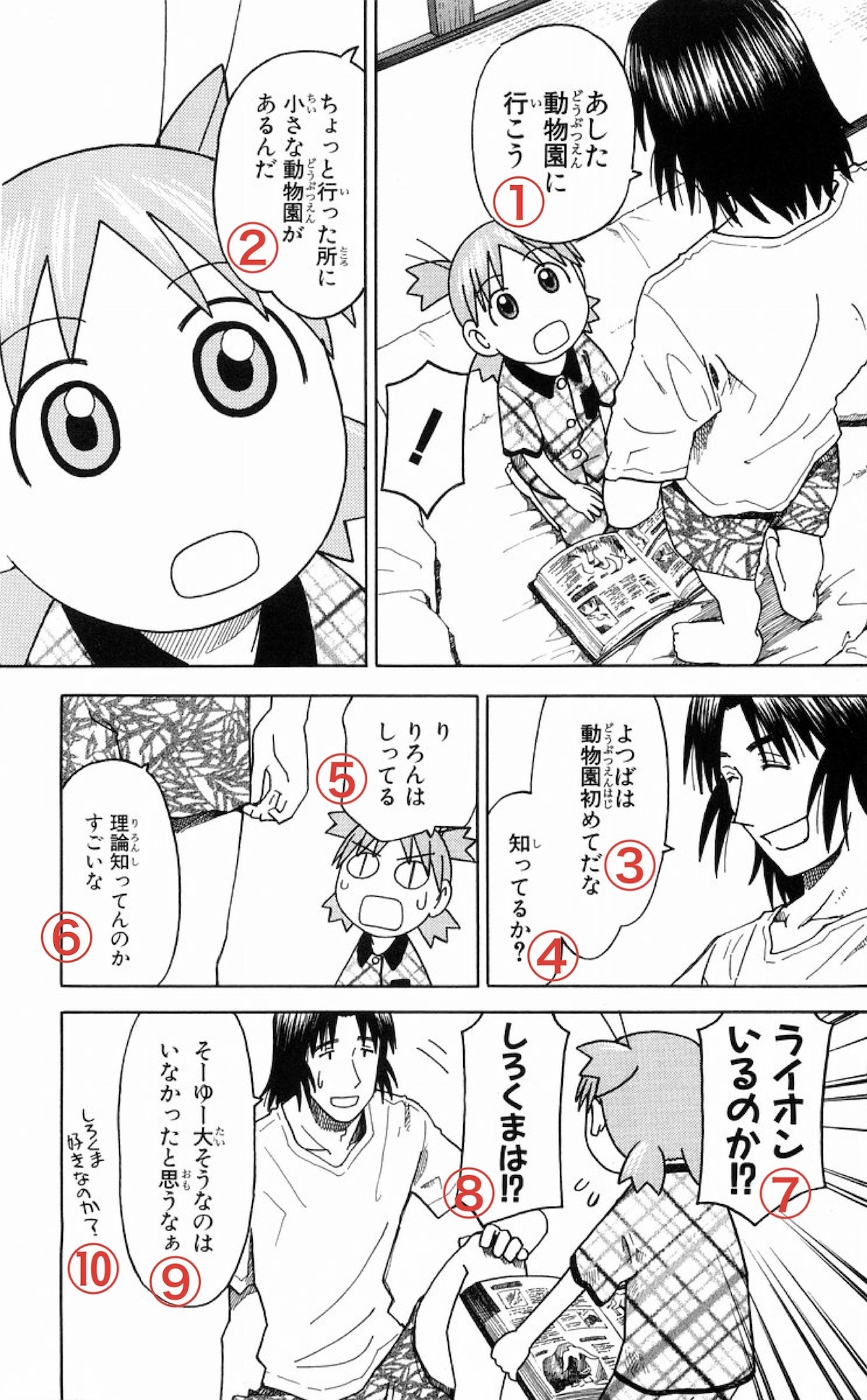
Let’s learn Japanese with our analysis of manga. We will analyse a manga snippet from Yotsubato! (よつばと!) Volume 3.
CONTENTS
Manga Snippet
 ©よつばと! (電撃コミックス)
Sentences
Hover or tap to reveal the censored romaji and English translation.
あした動物園に行こう
ashita dōbutsuen ni ikō
Let’s go to the zoo tomorrow.ちょっと行った所に小さな動物園があるんだ
chotto itta tokoro ni chiisana dōbutsuen ga arunda
There’s a small zoo right down there.よつばは動物園初めてだな
yotsuba wa dōbutsuen hajimete da na
It will be your first time at the zoo, right?知ってるか?
shitteru ka?
Do you know?り、りろんはしってる
ri, riron wa shitteru
I- I know the theory.理論知ってんのか、すごいな
riron shitten noka, sugoi na
You know the thoery? Wow.ライオンいるのか!?
raion iru noka!?
Will there be lions!?しろくまは!?
shirokuma wa!?
How about polar bears!?そーゆー大そうなのはいなかったと思うなぁ
sōyū taisō na no wa inakatta to omou nā
I don’t think they had anything impressive like that.しろくま好きなのか?
shirokuma suki nanoka?
You like polar bears?
Analysis of Manga
「あした動物園に行こう」
- あした (noun) – tomorrow
- 動物園 (noun) – zoo
- に (particle) – indicates direction; to
- 行こう (verb volitional-form) – let’s go
「ちょっと行った所に小さな動物園があるんだ」
- ちょっと (adverb) – a bit
- 行った (verb) – go
- 所 (noun) – place
- に (particle) – indicates place; at
- ※ちょっと行った所に is literally “at the place where you go a bit” = right down there
- 小さな (adjective) – small
- 動物園 (noun) – zoo
- が (particle) – indicates subject
- ある (verb) – there is (for inanimate objects)
- んだ – makes a sentence into an explanation
「よつばは動物園初めてだな」
- よつば (noun) – name of the main character meaning four (よつ) leaves (ば)
- は (particle) – indicates sentence topic
- 動物園 (noun) – zoo
- 初めて (noun) – first time
- だ (auxiliary) – makes a sentence declarative (attached to a noun or na-adjective)
- な (particle) – indicates request for confirmation/agreement in male speech; right? yeah? EXAMPLES
「知ってるか?」
- 知ってる (verb) – know
- か (particle) – indicates question (when used in casual speech, it sounds masculine)
「り、りろんはしってる」
- りろん (noun) – theory
- は (particle) – indicates sentence topic
- しってる (verb) – know
「理論知ってんのか、すごいな」
「ライオンいるのか!?」
- ライオン (noun) – lion
- いる (verb) – there is (for animate objects)
- のか – indicates question about what you hear/see in male speech (Yotsuba is speaking like a boy) EXAMPLES
「しろくまは!?」
- しろくま (noun) – polar bear
- は (particle) – indicates sentence topic
「そーゆー大そうなのはいなかったと思うなぁ」
- そーゆー (adjective) – that sort of
- 大そうな (na-adjective) – great, impressive
- の (particle) – makes an adjective into a noun; one, thing
- は (particle) – indicates sentence topic
- いなかった (verb) – was not there (for animate objects)
- と (particle) – used to make a quotation
- 思う (verb) – think
- なぁ (particle) – used to reduce the assertiveness/insistence of a statement EXAMPLES
「しろくま好きなのか?」
- しろくま (noun) – polar bear
- 好き (na-adjective) – like
- なのか – indicates question about what you hear/see in male speech (attached to a noun or na-adjective)
Examples
な
indicates request for confirmation/agreement in male speech
探していたものはこれだな。
sagashite ita mono wa kore da na.
This is the thing you were looking for, right?
一人で行けるな?
hitori de ikeru na?
You can go by yourself, yeah?
expresses admiration, compliment, surprise, etc
毎日とても幸せだなぁ。
mainichi totemo shiawase da nā.
Everyday, I am so happy.
夏休みにハワイに行ったの?いいなぁ〜!
natsuyasumi ni hawai ni itta no? iinā!
You went to Hawaii on summer holiday? How envious!
used to reduce the assertiveness/insistence of a statement
この企画は失敗だな。
kono kikaku wa shippai da na.
This project is a failure.
この味噌汁、ちょっとしょっぱいな。
kono misoshiru, chotto shoppai na.
This miso soup is a bit salty.
のか
expresses that you are impressed, surprised, moved, etc. by what you hear/see
もう宿題終わったのか。早いなぁ!
mō shukudai owatta noka. hayai nā!
You have already finished your homework? That’s fast!
コンサート中止になったのかー。残念だな。
consāto chūshi ni natta nokā. zannen da na.
The concert has been cancelled? That’s a shame.
indicates question about what you hear/see in male speech
熱が三十八度?そんなんで学校に行けるのか?
netsu ga sanjūhachi do? sonnan de gakkō ni ikeru noka?
You have a fever of 38 degrees? Can you go to school like that?
明日試験なのに、勉強しなくていいのか?
ashita shiken nanoni, benkyō shinakute ii noka?
You are having an exam tomorrow. Don’t you have to study?
Support Easy Peasy Japanesey
If you enjoy our content, please consider supporting Easy Peasy Japanesey. Your support will help keep us going. Thank you for your support!