Let’s learn Japanese with our analysis of manga. We will analyse a manga snippet from Yotsubato! (よつばと!) Volume 5.
CONTENTS
Manga Snippet
 ©よつばと! (電撃コミックス)
Sentences
Hover or tap to reveal the censored romaji and English translation.
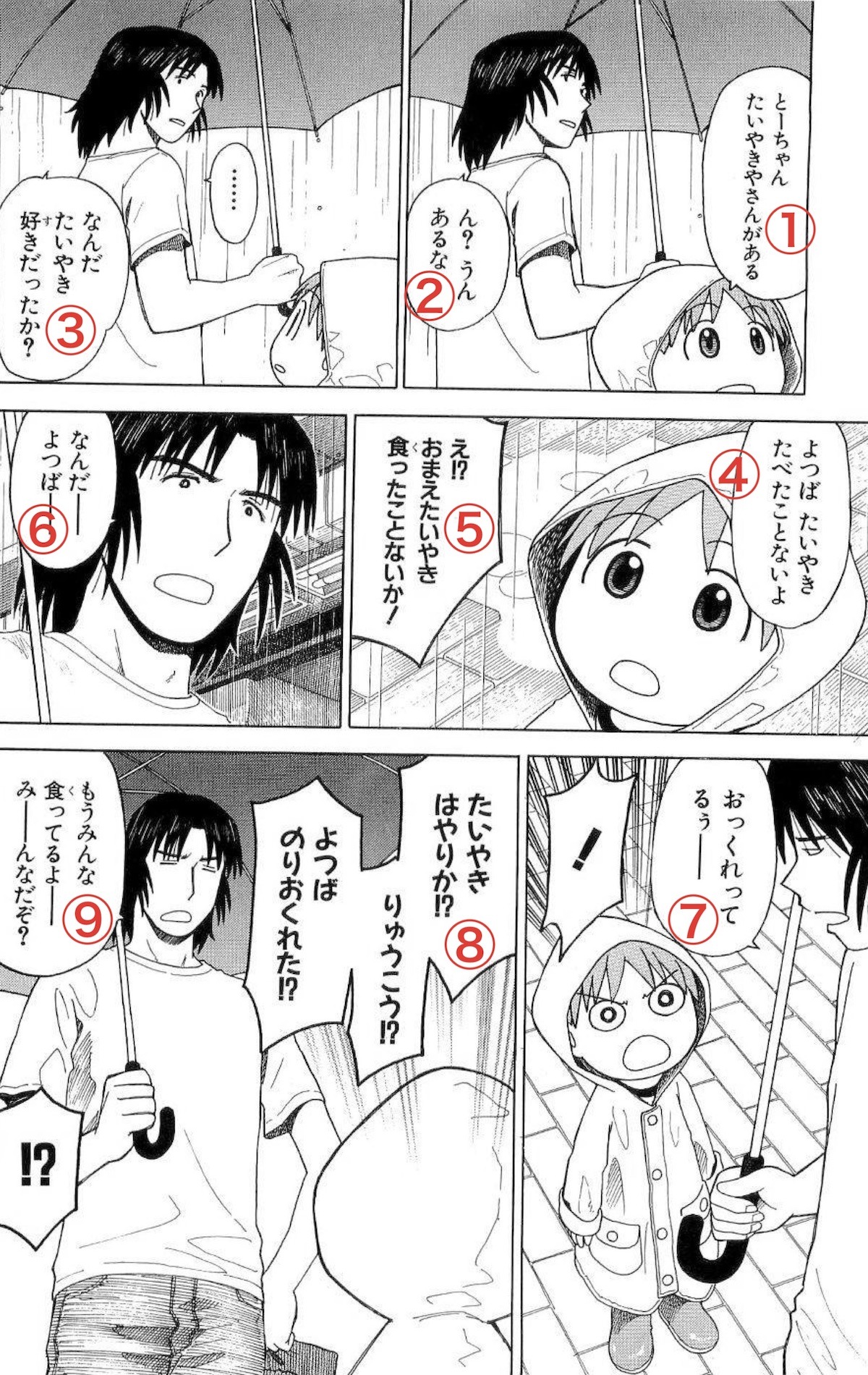
とーちゃん たいやきやさんがある
tōchan taiyaki-ya-san ga aru
Daddy, there is a taiyaki stand.ん?うん あるな
n? un aru na
Hm? Yeah, there is.なんだ たいやき好きだったか?
nan da taiyaki suki datta ka?
What, did you like taiyaki?よつば たいやきたべたことないよ
yotsuba taiyaki tabeta koto nai yo
I’ve never eaten taiyaki before.え!? おまえたいやき食ったことないか!
e!? omae taiyaki kutta koto nai ka!
Eh?! You have never eaten taiyaki?!なんだーよつばー
nan dā yotsubā
Whaaat, Yotsubaaa.おっくれってるぅー
okkuretterū
You are behind the times!たいやき はやりか!? りゅうこう!? よつば のりおくれた!?
taiyaki hayari ka!? ryūkō!? yotsuba noriokureta!?
Is taiyaki in?! Trendy?! Did I miss the trend?!もうみんな食ってるよー みーんなだぞ?
mō minna kutteru yō mīnna da zo?
Everyone has eaten already! EVERYONE!
Analysis of Manga
「とーちゃん たいやきやさんがある」
- とーちゃん (noun) – daddy
- たいやき (noun) – taiyaki (fish-shaped pancake with red bean filling)
- や (suffix) – shop, stand
- さん (suffix) – shows one’s sense of respect, politeness or intimacy
- が (particle) – indicates subject
- ある (verb) – there is (for inanimate objects) EXAMPLES
「ん?うん あるな」
- ん? (interjection) – hm?
- うん (interjection) – yeah, right
- ある (verb) – there is (for inanimate objects)
- な (particle) – expresses agreement in male speech; yeah, you’re right EXAMPLES
「なんだ たいやき好きだったか?」
- なんだ (expression) – used when something is unexpected, surprising or disappointing; what?
- たいやき (noun) – taiyaki (fish-shaped pancake with red bean filling)
- 好き (na-adjective) – favourite
- だった (auxiliary) – was
- か (particle) – indicates question (when used in casual speech, it sounds masculine)
「よつば たいやきたべたことないよ」
- よつば (noun) – name of the main character meaning four (よつ) leaves (ば)
- たいやき (noun) – taiyaki (fish-shaped pancake with red bean filling)
- たべた (verb) – ate
- ことない (grammar) – have never done before, have no experience EXAMPLES
- よ (particle) – used to make the listener aware of the information
「え!? おまえたいやき食ったことないか!」
- え!? (interjection) – huh?!, eh?!
- おまえ (noun) – you (used toward equals or inferiors in male speech)
- たいやき (noun) – taiyaki (fish-shaped pancake with red bean filling)
- 食った (verb) – ate (blunt and masculine way of saying 食べた)
- ことない (grammar) – have never done before, have no experience
- か (particle) – expresses that you are impressed, surprised, moved, etc.
「なんだーよつばー」
- なんだ (expression) – used when something is unexpected, surprising or disappointing; what?
- よつば (noun) – name of the main character meaning four (よつ) leaves (ば)
「おっくれってるぅー」
- おくれてる (verb) – late to the trend, behind the times
- っ – expresses a small pause to make it sound rhythmical in order to make fun of someone
「たいやき はやりか!? りゅうこう!? よつば のりおくれた!?」
- たいやき (noun) – taiyaki (fish-shaped pancake with red bean filling)
- はやり (noun) – trend, craze
- か (particle) – indicates question (when used in casual speech, it sounds masculine – Yotsuba is speaking like a boy)
- りゅうこう (noun) – trend, craze (a bit more formal than はやり)
- よつば (noun) – name of the main character meaning four (よつ) leaves (ば)
- のりおくれた (verb) – fail to get on, miss (a train etc.)
「もうみんな食ってるよー みーんなだぞ?」
- もう (adverb) – already
- みんな (noun) – everyone
- 食ってる (verb) – has eaten (blunt and masculine way of saying 食べてる) EXAMPLES
- よ (particle) – used to make the listener aware of the information
- みーんな (noun) – EVERYONE (emphasised by using a long vowel)
- だ (auxiliary) – makes a sentence declarative (attached to a noun or na-adjective)
- ぞ (particle) – indicates emphasis in male speech
Examples
Noun + がある (there is …)
千葉県には何があるの? – 成田空港と東京ディズニーランドがあるよ。
chiba-ken ni wa nani ga aru no? – narita kūkō to tōkyō dizunīrando ga aru yo.
What is in Chiba prefecture? – There is Narita airport and Tokyo Disneyland.
コーヒーと紅茶があるけど、どっちがいい?
kōhī to kōcha ga aru kedo, docchi ga ii?
There is coffee and tea but which one would you like?
な (expresses agreement in male speech)
お父さん、このラーメンおいしいね! – うん、おいしいな。
otō-san, kono rāmen oishii ne! – un, oishii na.
Dad, this ramen is delicious, isn’t it! – Yeah, it is delicious.
若い頃、二人でよく海に行ったよね。- うん、行ったな。
wakai koro, futari de yoku umi ni itta yo ne. – un, itta na.
When we were young, we often went to the beach together, didn’t we? – Yeah, we did.
In female speech, ね is used instead of な.
Ta-Form + こと(が)ある/ない (have experience/no experience)
芸能人に会ったことある?
geinōjin ni atta koto aru?
Have you ever met celebrities?
ウィスキーって飲んだことないけど、おいしいの?
wisukī tte nonda koto nai kedo, oishii no?
I have never drunk whiskey before but is it good?
もう + Te-Form + いる (to have already done something)
今どこにいるの?私はもう駅に着いてるよ。
ima doko ni iru no? watashi wa mō eki ni tsuiteru yo.
Where are you now? I have already arrived at the station.
急いで!もう映画が始まってるよ!
isoide! mō eiga ga hajimatteru yo!
Hurry up! The movie has already started!
In colloquial speech, い is often omitted. (〜ている → 〜てる)
Support Easy Peasy Japanesey
If you enjoy our content, please consider supporting Easy Peasy Japanesey. Your support will help keep us going. Thank you for your support!